
I talk about the importance of neck training for injury prevention in contact sports, the importance of having it for an aesthetically powerful physique and stuff of that nature in a lot of my articles, but I never really broke it down and told you exactly what you should be doing for neck work if you are a beginner.
If you have been doing your heavy Deadlifts and Shrugs but you aren’t too satisfied with the size of your neck and you’d like to add a few inches to it or atleast strengthen it then it is very important that you hit it with some direct isolation work.
The lifting world is very controversial when it comes to direct neck training because some people say that you shouldn’t do any neck work because it could potentially be dangerous and I definitely agree, but the exercises that I am going to give you below are hands down some of the safest that you could do to bring up your neck size and strength.
Today I am going to talk to you about 3 basic exercises that you could do to train your neck, these 3 exercises will cover the:
• Front of the neck
• Rear part of the neck
• Sides of neck
If you really want to grow your neck from all angles then make sure that you do all 3 of these exercises or else if you only do work for the front of your neck then it won’t appear big as a whole. The front of the neck may be the big and meaty part of it but you still want overall development so lets get into it.
ISOMETRIC NECK WALL PLANKS
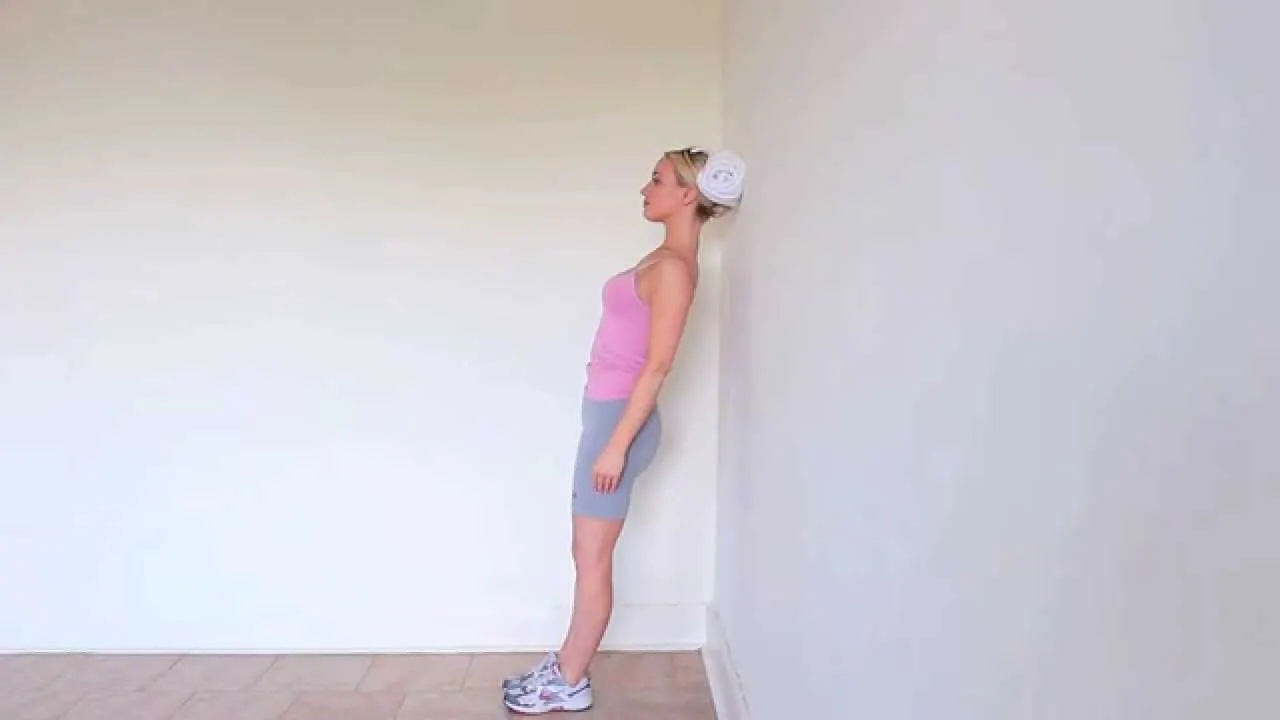
Yes I know that the name is pretty lame, but the exercise is key when trying to build a thick and strong neck in a safe manner. Its a bodyweight exercise where you are using your own weight as the resistance so when the set is done or when you can’t take it anymore then you can simply just stand up and the set will be done.
As far as the execution of the exercise is concerned, you basically start with your body as straight as possible (like a plank but standing), but most of the weight emphasis is put on the neck. In other words you should feel your neck working like crazy in the same away as you would feel your abs working like crazy during a plank or a side plank. I say a side plank as well because in order to hit the lateral part of your neck you will need to do I.N.W.P’s from the side which is very important when trying to get a wide neck as well.
If you want to target the side of your neck then you must do what is being done in the picture above except sideways and if you want to target the front of your neck then you must do the opposite of what they are doing in the picture above. When your eyes are facing the wall on I.N.W.P’s that is when the front of the neck is being worked. The picture at the top is displaying the rear part of the neck being worked.
You want to make sure that your body is as straight as possible because at first you may think that you are straight but on camera your posture will be off so make sure that you record your form. When you are very straight I can almost guarantee you that you will feel your neck working right away in an isometric manner. If you cheat on this exercise by hyper-extending your back or doing some kind of movement that doesn’t allow your body to be straight then I can almost guarantee you that most of of the stress will no longer be on the neck which defeats the whole purpose of this exercise.

You want to keep a neutral spine and a neutral head, but you also want to slightly keep your chin tucked because that will activate some of the muscles in your neck to an even greater degree in a safer way. To activate your neck muscle to even more of a degree to take it a step further, you also want to keep your tongue at the roof of your mouth during isometric work.
As far as the progressions are concerned, you want to be able to do atleast 1 minute at the very least of the easiest progression which is the one where your back is basically against the wall. Once you are able to do that for 2 minutes then you could advance to a slightly harder variation where your feet a slightly a bit further away from the wall and your head is lower as well.
Once you get to the point where your body is like 45 degrees with the wall then you are doing pretty good for yourself but you don’t want to go too low either because that could potentially be dangerous so I am a big advocate of just doing longer holds. Once you are able to do holds with your feet fairly far away from the wall for sets of 2+ minutes then you could go back to the easiest variation but do it with a weight vest so that you are making the exercise harder and of course this wouldn’t be until several months or years after being very strong, careful and confident with your ability to perform this movement with flawless technique.
Another option once you get stronger would be to lift a leg up to add more of a unilateral/balance component to the mix in order to make the exercise more challenging.
One of the other reasons why I like these neck exercises is because your core is also being worked a lot and most people don’t do enough core work so you will be killing more than 2 birds with one stone. A stronger core (abs and obliques) will also help contribute to some better Deadlift and rack pull numbers as well so you will also be getting stronger for those movements which will also help your neck development in return in the future.
If you feel like this exercise is hard on your head then you could put on a thick winter hat and fold a pillow up 3 times so that the exercise is easier on your head. I wrote down some other options below in this article if that still hurts your head.
COMMON QUESTIONS
What if this exercise hurts me even with a pillow and a hat?

If this exercise hurts even when you are wearing a winter hat and with a folded pillow on the wall then you could take some sort of soft ball (kind of like a mini yoga ball or something like that) that will absorb more of the force so it won’t be as hard on your head. This is actually an option that I prefer just as much because believe it or not with a ball it actually works more of the stabilizers in the neck so you are actually getting more neck activation and better pumps. Doing neck planks on the wall with a ball is like doing ring push-ups as opposed to push-up son the floor, you just get a unique amount of activation and better pumps in my opinion. You just want to make sure that you are concentrated when doing your sets because you don’t want to snap your neck up.
If the ball variation of this neck exercise still hurts your head then you could just perform longer isometric holds 2+ minutes while wearing a winter hat as well.
What about neck bridges? Those build big and strong necks, plus Mike Tyson did them.
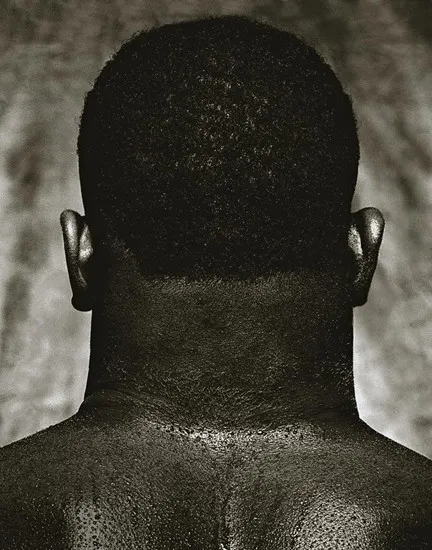
Neck bridges are great exercises (when done properly), but the problem is that most people don’t have good full body awareness and don’t perform them properly. I am a bigger advocate of the exercise that I named above but if you can neck bridge with flawless form and reap all of the benefits of the exercise in a safe manner than go right at it.

How about sets and reps for the week to stimulate growth?
I like to count my sets and reps with total time on the wall. For example, if you did 3 sets of 2 minutes for each side then that equals to:
Front neck work = 6 min
Side neck (both sides) = 12 min
Back neck work = 6 min
Total of 24 minutes that the neck is working extremely hard in one session, that is effective.
You may not be able to start with that if this is your first day, for you 12 total minutes per neck session may be fine to spark some amazing growth (some beginners might only need one minute per side with the easiest variation for one set). The idea is that you basically want to be doing the hardest variation that you can for a minimum of 1-2 minutes. I don’t like to do sets of under a minute because that is kind of similar to doing low reps for neck work and that usually gets people injured so I like to keep the sets and time under tension high to 1-2 minutes, but there is no reason why you can’t go higher than that at the end of a workout to really finish off your neck with an easier progression.
There are many slow twitch muscles in the neck so they do respond fairly well to high reps and long isometric holds (atleast in my experience) so don’t be scared to have sets that last 3-5 minutes from time to time at the end of the workout if you really want to torture your neck. Of course you would use an easier variation for this where your feet are close to the wall but you would just do it for more time.
CONCLUSION:
People all over the internet are always complicated neck training and giving it a bad name but it really doesn’t have to be that complicated, in fact it is pretty simply and straightforward. The important thing now is that you make neck training a habit and you will see that you physique will start to transform in front of your own eyes.
If you are interested in getting a bigger neck and bigger traps then check out my HULK program that I just put out in the program section. It is a 12 week specialization program for that area and it is sure to add on some extra slabs of mass around that area.