
Bodyweight exercises are great for building size, strength and have other great benefits, but could they help increase you Squat, Bench and Deadlift numbers?
Yes, they certainly can.
To increase your Squat, Bench and Deadlift, you have to practice those lifts often, that’s first off. You can’t get better at speaking English by speaking in French. The only problem is that once you get passed the beginner phase, you can’t only do the big 3 because you will get injured pretty quickly. You need some “assistance” exercises that will help improve your lifts. The reason why you can’t always do the big 3 is because a lot of heavy barbell work could wear and tear you down pretty fast if it’s all you do especially if you are strong. A smart approach would be to do the main movement at the beginning of your workout (Squat, Bench or Deadlift) and then assist it with other exercises that aren’t as hard on your joints and CNS. Dumbbell exercises are great for this but bodyweight exercises are also perfect for this because they could help you add extra frequency and volume without destroying the joints and they still give you a good training effect. Let me show you how bodyweight exercises could increase your BIG 3, starting with the squat.
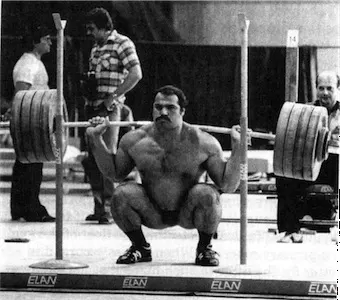
SQUAT:
• Hill Sprints: These develop your explosiveness and your posterior chain which are extremely important for squats. Jim Wendler once said that Hill Sprints helped his squat out and Jason Ferruggia said that it’s rare that people who do a lot of sprinting don’t hit PR’s when they get back to squatting heavy.
• Glute ham raises: These develop your posterior chain and are a staple in many Powerlifting circles. Many lifters actually do their Glute Ham Raises before Squats and feel a lot stronger. Its good for knee flexion and hip extension so you are killing two birds with one stone. The only problem with this exercise is that it requires a glute-ham bench but if you are a powerlifter then you might have it in your gym.
If you don’t have access to one, then you can simple find a way to hook your feet under something stable so that you can try to replicate a glute ham raise machine. This method may not be exactly like the original GHR but it could still get the job done. These are easy on the joints and the spine so you could do GHR’s three times per week and not run into any recovery issues.
• Back extensions 45 degree and horizontal: Back extensions are great for hitting the posterior chain as well. If you are a powerlifter, then your gym most likely has this but if you don’t have access to it then you can easily just put your feet under parallel dip bars and your hips over the dip bars to replicate a horizontal back extension.
• Plank variations: are essential for squats and deadlifts because it’s hard to lockout a heavy weight with a weak core. Obliques are very underrated for locking out heavy weights as well so you can do some advanced Side Planks where your feet are attached to a TRX if you are ready for it.
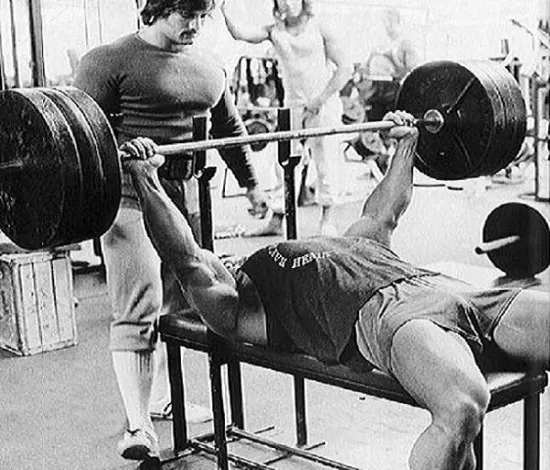
BENCH PRESS:
• Ring Dips: These will develop your triceps like nothing else. For more emphasis on the chest simply lean forward a bit and for building up your triceps just stay upright.
• Pull-ups: To bench press heavy weights you will need a strong foundation, in other words, big and strong lats could help improve your bench press.
• Push-up variations (Ring, Handstand, Explosive): Push-ups are great for adding more volume without destroying your shoulders. The Handstand Push-up could actually serve as a great assistance lift for the bench press as well because everybody knows that increasing your relative vertical pushing strength will automatically increase your horizontal pushing strength. This is the reason why lifters will notice that when they increase their Military Press their bench press increase automatically. It’s funny because benching heavy won’t have a big carryover to your vertical presses.
• Inverted Rows on Rings: These will train your upper and mid back which is very important when trying to bench heavy weights. Since your lats will get stronger from pull-ups I would recommend that you do inverted rows with your elbows flared out to the sides so that you will work your upper back. Inverted Rows on rings with the elbows flared out is a very humble movement but it will get your upper back bigger and stronger in the process.
Deadlift:
• Glute ham raises: These are a staple for many powerlifters because they strengthen the posterior chain without loading the spine. These are great for assisting your squat but they are great for assisting the deadlift as well since you need strong glutes and hamstrings for power.
• Back extensions (45 degrees and horizontal): These will add some volume and frequency to your training without destroying your joints in the process.
• Pull-ups: Everybody knows that you need strong lats in order to Deadlift a lot of weight, Pull-ups are the best lat exercise in existence.
• Front Levers: Front levers are kind of like straight bar pullovers and they teach you how to engage the lats for the deadlift. Some people actually consider this exercise to be the deadlift of the calisthenics world! These also work your core to a great degree along with the long head of the triceps. The combination of increased lat, core and tricep strength will definitely assist you during the deadlift. The role of the lats in the deadlift is to help keep the bar as close to you as possible and the role of the core is to stay tight throughout the movement for heavier loading potential and protect the lower back. These are two things that the front lever helps you to a great degree, don’t sleep on this exercise!
CONCLUSION:
Calisthenics could increase your Big 3 lifts, but you have to focus on getting stronger with progressive overload if you really want to see a difference. Never underestimate the power of bodyweight training.