
The rear delts are one of those muscles that are small, but still play a huge role in improving your posture, giving you that V-taper look, upper back thickness and also contributes to full back development. I was personally blessed with some good front and side delt genetics, but my rear delts always lagged behind no matter how much volume I hit them with.
The rear delts are the small muscles in the back of the shoulders and for most people they can recover quickly. The rear delts are kind of like the traps in the way that they can take a lot of abuse. I rarely ever see people with very developed rear delts and in my opinion, they’re one of the hardest muscles to overtrain! My rear delts are nowhere near impressive, but it was only in the beginning of 2015 that they started getting bigger than they were before and it was because I made many changes to my program to really bring up that area. Most articles will tell you that to bring up the rear delts you just need to do more face pulls and more direct work for them with light 10lb dumbbells while you really feel the squeeze and this might be true to a certain extent, but I have talked to many coaches and there are many things that you should take into consideration when trying to build up those stubborn rear delts.
Its a shame because a lot of people have some pretty good front and side delts, but the fact that their rear delts are non-existent just makes their shoulders look very small as a whole. On the other hand, if you have somebody who has bad front delts and mediocre side delts, but has massive rear delts then his/her shoulders will look broad. Will it be optimal size? Of course not, but the person will definitely be considered broad because the rear delts are the meaty part of the shoulders that push the side delt out more which creates the illusion of size.
I don’t care how big your front and side delts are, if your rear delts are lagging then you have small shoulders, period.
COMMON BELIEFS
Some people with crappy rear delt development and terrible posture seem to think that all of this will change if they just do some direct rear delt isolation work, but that is incorrect in most cases. Most gym rats do a lot of heavy bench pressing and are actually pretty decent at it too, but their pressing numbers are nowhere close to their rowing numbers because they haven’t built a strong back foundation. Some people can bench press 275×5 but can’t even Barbell Row, Pendlay Row or T-Bar Row 185lbs. Their pushing muscles are clearly stronger than their pulling muscles so there is clearly an imbalance there. These same people think that doing a few sets of rear delt flies with their little 10lb dumbbells is going to solve that problem, but it won’t. To make this even worse, most people actually train their chest more than they train their upper backs, I’ve seen it with my own eyes. These same people have terrible posture and their rear delts are literally non-existent.
Not only that, but the rear delts play a really important role in complementing your lats, upper back and traps so its a muscle that ties in very well with others and its a must-have muscle. You could still manage to look big without having big biceps or a big chest, but the rear delts are something that you can’t escape, it should be one of your main prioritizes for looking bigger and improving your posture.
So the point that I am trying to make here is that just because the rear delts are tiny muscles in back of the shoulders doesn’t mean that you can develop them by lifting soup cans (unless if you are on drugs). You will have to work very hard for them and lift heavy because the upper back and rear delts love and can tolerate heavier weights than you may think. The delts are already hard enough to build to an appreciable size as a drug-free lifter so you have to make sure that you are getting stronger at the given movements that I am going to give you below.
Once you get strong on the first two tips below then you can start doing direct rear delt isolation work, but the isolation work alone won’t do much so don’t expect miracles because it is simply the icing on the cake. I would even go as far as saying that if you are a newbie to the iron game then you might not even need to isolate your rear delts right away because your whole body is weak and everything needs to be brought up as a unit and rear delt fly’s with soup cans won’t do much, believe me I’ve tried it and nothing happened.
When it comes to building x muscle it is important to hit that muscle in a variety of different angles and rep ranges so that is what I am going to discuss below.
1) SNATCH GRIP PULLING VARIATIONS.


“If you start with a 225-pound deadlift today and increase that over the next few years to a 500-pound deadlift I can guarantee you that your rear delts, rhomboids, lower and upper traps will be enormous… or at least far bigger than they are right now.”-Jason Ferruggia
We always hear the typical advice from people saying that if you want bigger rear delts then you have to do heavy deadlifts or rack pulls and this is true because if you are engaging your back properly in any of those movements then your rear delts will have no choice but to grow, the rear delts may be small but they love heavy weights. Right above I pasted a Jason Ferruggia quote where he says that you should basically try to double your deadlift numbers if you are a beginner and aim for a solid set of 500 and your rear delts will be a lot bigger and I definitely agree.
For most people, the advice that Jason Ferruggia is pretty much all you need for bigger rear delts, but for the strong dead lifters who still have stubborn rear delts, you will have to take it a step further. Snatch Grip Rack pulls are one of the best exercises you can do for your rear delts and upper back because they allow you to lift heavier weights to overload the rear delts due to the hand placement and elevated pins. The Snatch Grip Rack Pull also takes the legs out of the equation so you are able to overload your upper back even more.
Clean Grip High pulls are great for improving your snatch and getting big traps but most people get shoulder pain from them and they don’t engage the rear delts and upper back as much as the snatch grip high pull. The Snatch Grip High Pull is an explosive lift that I like to do for 5 reps or lower that works the whole upper back in an explosive fashion and done correctly it can grow your rear delts and make them sore like never before.
Another great option would be the Snatch Grip RDL.
How wide exactly?
All of our bodies are made differently so there isn’t one width that will be appropriate for everybody, but start with a bit outside of shoulder width and gradually go a bit wider each workout until you have found the widest grip you can do while still being able to use decent weights and perform the exercise correctly.
Why use a snatch grip over a regular shoulder width overhand grip?
The standard grip is great and might help you engage the lats even more and might even be better for lat development, but the snatch grip puts a lot more emphasis on the upper back and rear delts. Don’t believe me? Try to take a broomstick or an empty bar with a snatch grip while standing tall with your chest up and pull the bar into you. You while most likely feel your rear delts working harder than they would if your hands were closer in.
To strap or not to strap?
If you have very good grip strength then strapping might not be necessary but if you feel like you can lift more weight properly with straps then go ahead. No point in focusing on your grip strength when you are trying to build bigger rear delts and a thicker upper back so just do grip work after.
How high do you set the pins on the snatch grip rack pulls?
I like to place the pins slightly above the knees on the snatch grip rack pulls in order to take the lower body out of the movement as much as possible and also to overload the upper back as much as possible too. These may look a bit like an ego lift, but they work and your upper back will feel a soreness like never before.
Although there are many different pin heights that you could play around with such as the mid thigh for extreme overload, but I personally found that I got the most gains when I did and when I do my snatch grip rack pulls from slightly above the kneecap.
2) DO WIDE GRIP ROWING VARIATIONS SUCH AS SNATCH GRIP PENDLAY ROWS
Yes its true that snatch grip rack pulls will pack some size on those rear delts by overloading them, but you also need some heavy rowing in your program as well for more overall development. If you want to put more emphasis on your upper back and rear delts then you have to start doing your rows with a wider grip! The narrow and close grip are great for different areas of the back such as the lats, but if you really want to bring up the upper back then snatch grip pendlay rows MUST be at an exercise that should be at the top of the list in your program.
I don’t care about how much you love your pull-ups and bench presses, if you want bigger rear delts then you have to treat the snatch grip pendlay row (SGPR) as if it were a competition lift. I used to do a lot of pendlay rows (and I still do), but I was doing them with my elbow pretty tucked in for the most part and although this did allow me to lift more weight, my rear delts were not getting bigger.
Its funny because most people don’t include any wide grip rowing vairations in their program. In fact, the most that they will od is probbably a half-assed wide grip cable row at the end of their back workout which obviously iosn’t going to do much. Should you still incorporate any wide grip cable rows? Of course, but I will get to that in later tips!
You want to make sure that your elbows are really flared out on the SGPR’s because that will really stretch out that upper back and hit those rear delts like they have never been hit before.
As far as my standards are concerned, I think that a good goal is to try to eventually get to a 365lb x 5 SGPR.
3) MAKE MEADOW ROWS A STAPLE IN ALL OF YOUR PROGRAMS
We discussed how you need some overloading movements and heavy wide grip rowing movements to bring up your rear delts, but another very important factor to bringing up any muscle groups is unilateral work. Unilateral movements allow you to dedicate all of your attention to one side at a time and if you are doing one arm rows with your elbow flared out then it could be a great way to build up those delts.
The question is, what unilateral exercise should we do?
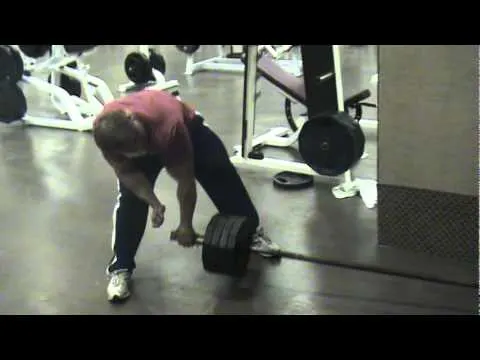
I have tried dozens and dozens of one arm rowing variations, but nothing in my opinion has felt better for my rear delts than meadow rows. The meadow row is an exercise invented by John Meadows himself (in the picture above) and he used this as one of his back exercises to help build his back. The fact that this exercise is done with a landmine or a barbel in the corner allows a unique contraction in the rear delts that cannot be duplicated with other methods.
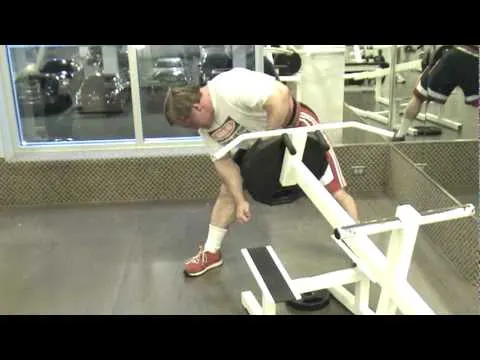
The Meadow row done on a chest supported T-Bar row apparatus is also a great movement as well for hitting the rear delts so its another meadow row variation that you could add into the mix in order to spice things up a bit.
The reason why these are such an effective rear delt builder is similar to the way the snatch grip Pendlay row is an effective rear delt builder: it takes more lats out of the equation. This is the reason why you might be able lift more weight on the one arm T-Bar row (photo below) because the lats are very strong muscles.
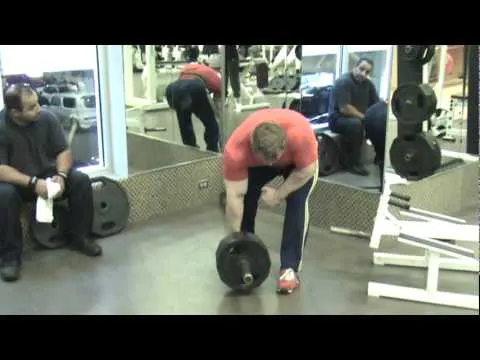
On the other hand, you will still be surprised on how the loading potential on meadow rows is still decent. As far as the goals are concerned, I think that a 185lb meadow row (four 45lb plates) for a set of 10 is a good goal to shoot for.
4) HIGH VOLUME & FREQUENCY ON DIRECT REAR DELT WORK


Direct rear delt exercises are great because they give us the opportunity to work our rear delts without too much bicep involvement so we can really isolate what we are trying to focus on. As for my favorite direct rear delt exercises, I like Band Facepull/BPA (Band pull-apart) combos where you pull the band to your face while you are pulling it apart. This is a special exercise that I got from my buddy Alphadestiny and it works like a charm.
Another exercise that I like a lot is the reverse pec deck with bands because it accomodates the resisteance at the top which maeks the contraction that much better. Last but not least I like some basic dumbell or cable rear delt flies done while sitting in a bent over position so you can take your lower back out of the equation.
What are the best rep ranges for direct rear delt work?
This is a very good question because the rear delts tend to respond very well to high reps when they get hit directly but how high exactly? I like reps of 10-50 but there is no reason why you can’t do sets of 100 at the end of a workout to really finish off the rear delts even more.
What about drop sets?
Drop sets work incredibly well for the rear delts and if you have stubborn rear delts like me then I would highly recommend that you do some drop sets to get more volume in. Drop sets are also very good if you are somebody who is pressed for time and wants to get more reps in.
5. INCORPORATE MORE HORIZONTAL PULLS AND LESS VERTICAL PULLS
One of the mistakes that people make when trying to bring up their rear delts is that they will incorporate way too many verrtical pulling exercises in their program. You have to prioritize certain muscle groups over others so choose upper back/rear delts or lats because you can’t put 100% of your focus in both of them, you have to choose.
If you really have to have vertical pulls in your program then make sure that you incorporate wide grip pull-ups because those will target your uper back more than a closegrip which will give your rear delts a bit of indirect stimulation.
My rear delts are bigger than they have ever been and I credit that to putting a lot of my vertical pulls not the back burner while mostly focusing on heavy rowing variations in a variety of differnt rep ranges with my elows flared out.
Its still good to incorpate rows with your elbows tucked in because that will improve your numbers on your wide grip rows too so don’t think that I always perform my rows in this fashion.
For example, when I was pendlay rowing 315×5 with my elbows tucked, I was able to do wide grip pendlay rows with about 275-295×5, but when I improved my pendlay with elbows tucked my wide grip row flew up too (and vice versa).
6. ALWAYS INCROPRORATE SOME ISOMETRIC HOLDS IN YOUR PROGRAMS
So we dicsussed partial overloading movements, heavy rowing exercises, uniltarel benefits and programming tips, but now its time to talk about another tool that you could and should use in order to build bigger rae delts: iseomtric holds.
SGPR’s are amazing for the rear delts, but you also need some movements where you are holding a pause at the top. For example, I find that wide neutral grip cable rows are a great movement for building up the rear delts when they are done with the elbows flared out for high reps a 3 second hold at the peak contraction.
Another way that I like to bring up stubborn rear delts is by simply incorporating static hold exercises like crucifix holds except they will be done in a bent over position in order to hit the rear delts.
Most prorgams fail to explore the world of pause, statics and holds except for when they do ab work like planks, but they could be a solid tool for bringing up the rear delts, but of course these alone won’t perform miracles either and you have to get strong at the movements that I’ve listed above for most of your rear delt gains.
BONUS: UPPER BACK BAND WORK FOR WARM-UPS AND OFF DAYS.
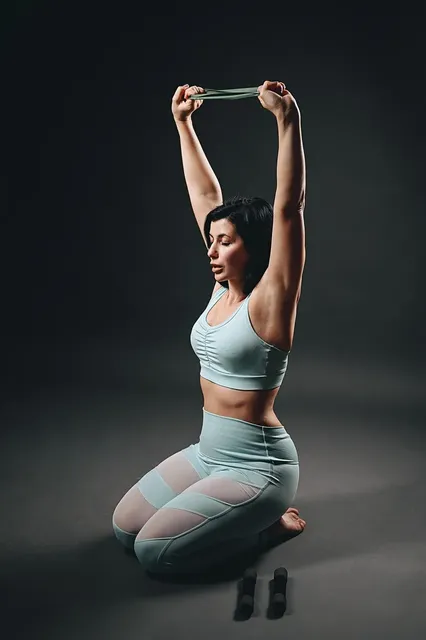

If you’re very serious about getting bigger rear delts then a good idea would be to include band work such as band pull-aparts throughout the week during your warm-ups before your workout and on off days to get more total rear delt workload in. Remember that the rear delts can most likely handle more work than you think and on top of that bands are easy on the joints which means that you can use them often and it won’t tap into your recovery too much either.
I personally keep a band in my closet so that I could do some band facepull/BPA combos whenever I open my closet just to start off my day.
CONCLUSION
So there you have it, now there are no more excuses for small rear delts. Follow the different forms of exercises listed above several times per week while focusing on setting PR’s without breaking too much form and you should see bigger rear delts within the next few months.
Here is a reminder of what some good standards are for building massive rear delts:
Snatch Grip Rack Pull: 600lb – 700lb+ x 5
Snatch Grip Pendlay Row: 365lb x 5
Meadow Row: 4 Plates x 10
Wide Neutral Grip Cable Row: full stack x 10 (with 3 second isometric holds at the top of each repetition)
Now you can get those rear delts to grow like they never have before, you can thank me later.